
Premium Hearing Aids & Aftercare in Leicester
At The Hear Clinic, our Leicester-based audiology clinic, Consultant Audiologist Mr Neel Raithatha provides expert, clinically led hearing care and advanced hearing solutions for those seeking high-quality hearing aids in Leicester. As a fully clinical service operating to the highest professional standards and utilising state-of-the-art audiological equipment, we recognise that hearing loss is far more than a physical condition. It can significantly impact confidence, relationships, mental wellbeing, and overall quality of life.
Modern hearing aids are now discreet, highly advanced, and truly life-changing. They can help you reconnect with loved ones, enjoy social situations again, improve performance at work, and experience the world with renewed clarity. At The Hear Clinic, Mr Neel Raithatha provides comprehensive diagnostic hearing tests, personalised hearing aid fittings, and ongoing professional aftercare to ensure every patient receives the safest, most effective hearing solution tailored precisely to their lifestyle and hearing needs. If you are looking for trusted, clinical-grade hearing care and hearing aids in Leicester, we are committed to helping you hear better and live better.
Below, we explain the different hearing aid styles available, outline the price of hearing aids, describe how we perform personalised hearing aid fittings, and detail our long-term aftercare commitment to your hearing health.
Hearing Aid Styles
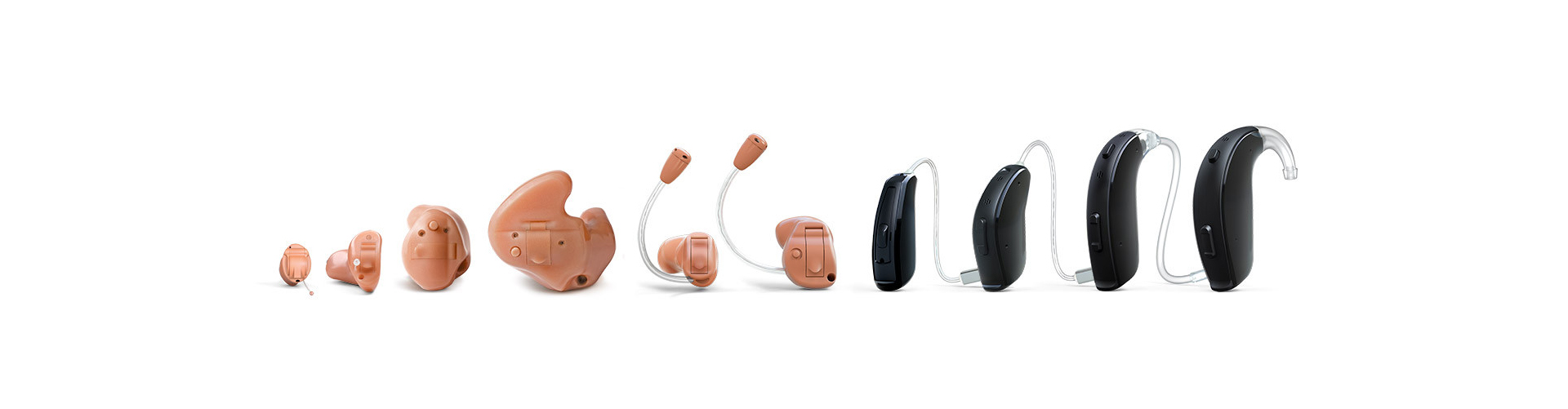
It is important you select a hearing aid style that addresses your individual hearing loss, ear physiology, cosmetic preferences and practical needs. We will be able to advise and recommend the most suitable hearing aid style across all manufacturers to ensure all of your requirements are met. There are two main hearing aid styles available. These are known as ‘custom‘ and ‘over-the-ear‘ hearing aids.
1. Custom
Custom hearing aids are specifically manufactured to fit the individual shape, size and contours of your external ear (pinna) and ear canal (external auditory meatus). To do this an impression is taken of your ear which the hearing aid manufacturers then scan and use to sculpture the hearing aid for your individual ear. They are available in a number of different sub-styles which are all discreet to different degrees and avoid conflict with glasses, hats, etc.
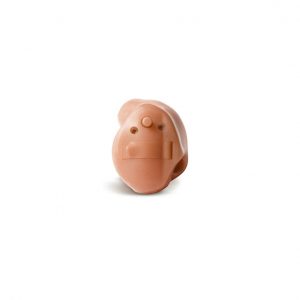
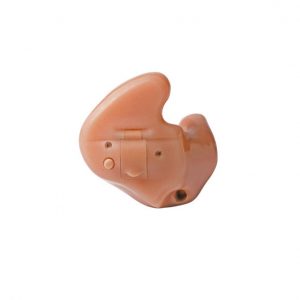
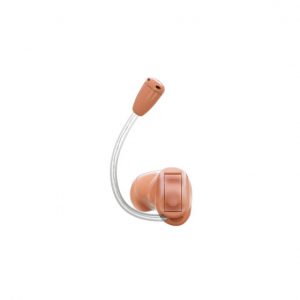
2. Over-the-ear (OTE)
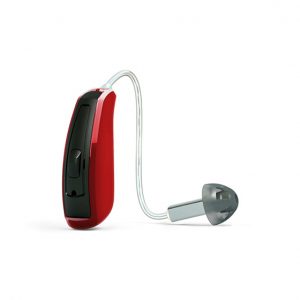
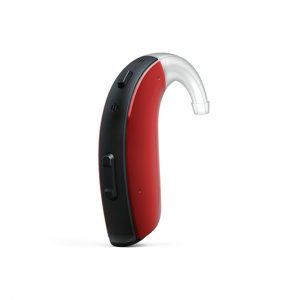
Over-the-ear (OTE) hearing aids sit over the top of the external part of your ear (pinna) and deliver sound into your ear canal (external auditory meatus) via a tube of some description.
They are available in 2 different sub-styles which all have wireless and telecoil functionality. In addition, they all have dual-microphones to help with speech understanding in noise as the location of the microphone means it cannot preserve the natural acoustics provided by the external part of your ear.
Hearing Aid Prices
Hearing aids can bring immense joy, confidence, and a significant improvement in quality of life. However, they are also a medical device and a financial investment, so it is important to fully understand hearing aid prices and the factors that influence their cost before making a decision. At The Hear Clinic in Leicester, we believe in full transparency, clinical integrity, and helping every patient make an informed choice that suits both their hearing needs and their budget.
Does Size Matter?
Historically, hearing aid prices were largely dictated by their size, with smaller and more discreet hearing aids costing more than larger models. Today, however, the price of hearing aids is mainly determined by the level of technology inside the device rather than its external appearance. Advanced hearing aid technology offers artificial intelligence, superior sound processing, better speech clarity in noise, improved connectivity, and greater listening comfort — and this is what most influences cost.
However, unlike many electronic devices such as smartphones, the benefit from a hearing aid is not solely determined by the technology alone. Hearing aids are medical devices, and their success depends heavily on the clinical expertise, accurate programming, and ongoing aftercare provided by a qualified Audiologist or Hearing Aid Dispenser. As a result, the same hearing aid can provide very different outcomes depending on the clinic and clinician fitting it. This is similar to how the cost and success of treatments such as dental implants can vary between dental clinics and dentists.
What’s Included in the Price?
For hearing aids to perform optimally long-term, they require expert fitting and prescribing, regular maintenance, servicing, re-calibration, and professional aftercare. At The Hear Clinic, this aftercare is usually included in the overall hearing aid price and involves:
- Optimal fitting and prescribing of hearing aids using ‘Real-Ear Measurements’ (REMs)
-
Routine cleaning and microphone and receiver filter replacement
-
Performance testing using a Hearing Aid Test Chamber
-
Fine-tuning and reprogramming as hearing changes
-
Six-monthly service appointments
The level, frequency, and duration of aftercare can vary between providers and may be limited to the warranty period or included for the lifetime of the hearing aids.
Another important factor affecting hearing aid prices is the warranty period. Standard warranties are typically two years, while some hearing aid packages include four or five-year warranties. Extended warranties can significantly reduce the risk of costly out-of-warranty repairs, which often only carry a six-month manufacturer guarantee. At The Hear Clinic, we offer a five year aftercare and manufacturers warranty package with all hearing aids.
How Much Do Hearing Aids Cost?
At first glance, hearing aid prices may seem high. However, when the cost is spread across the typical lifespan of a hearing aid — approximately 5 to 7 years of daily use — the monthly cost is often comparable to a mobile phone contract.
For example:
-
Standard-level hearing aids typically cost around £2,990 per pair, which equates to approximately £49.80 per month over 5 years.
-
Premium-level hearing aids can cost up around £3,990 per pair, which works out at approximately £66.50 per month over 5 years.
Importantly, hearing aids are worn all day, every day, 365 days a year, and the price reflects not only the technology itself but also the expert clinical assessment, precise fitting, professional programming, and ongoing aftercare provided by a qualified healthcare professional.
Personalised Fitting
As recommended by both the British Society of Audiology (BSA) and British Academy of Audiology (BAA), at The Hear Clinic we perform ‘Real-ear measurements’ (REMs) when fitting digital hearing aids using the latest hearing aid fitting equipment.
To learn more about REMs and its benefits please select from the tabs below.
REMs are used to measure the sound level of a hearing aid inside your individual ear. By doing so, the sound level of a hearing aid can be compared and then carefully fine-tuned to your prescribed sound level.
Everyone’s ears differ in shape, size and anatomy. These factors along with many others affect the sound level of a hearing aid in your ears. Although hearing aid manufacturer’s software know what your prescribed sound level is, it cannot guarantee that the hearing aid will be providing you with this since they do not know the individual shape, size and anatomy of your ears. REMs are the only way to be certain a hearing aid is providing you with your prescribed sound level.
The answer is that your hearing aids may not be providing you with your prescribed sound level and as a result you may not be receiving the maximum benefit from your hearing aids.
Your prescribed sound level is calculated by prescription formulas. The most recent and widely used prescription formulas are called ‘NAL-NL2’ and ‘DSL mI/O’. NAL-NL2 is the preferred prescription formula for adults and DSL mI/O for children.
Prescription formulas use your hearing test results as a starting point to calculate your prescribed sound level at each frequency. REMs are then used to ensure your hearing aids are providing you with your prescribed sound level at each frequency.
A soft probe tube microphone is placed into your ear canal and sounds are played to you via a speaker. The soft probe tube microphone can then measure the sound level of the hearing aid in your ear. This is displayed on the computer alongside your prescribed sound level. The sound level of the hearing aid can then be compared and carefully fine-tuned at each frequency until it closely matches your prescribed sound level.
Contrary to belief, hearing aids are not designed to restore or provide you with perfect hearing. This is why REMs are an essential tool to help maximise the benefit you receive from hearing aids.
Unfortunately not.
There are several reasons. Many hearing care professionals do not have the appropriate training or equipment available to them, whilst others haven’t sufficient time to perform REMs when fitting hearing aids.
Quality Aftercare
After your hearing aids are fitted, at The Hear Clinic we schedule follow-up appointments to monitor your progress and help you acclimatise to your new lease of sound.
Once you are experiencing the maximum possible benefit from your digital hearing aids, we offer free routine six monthly hearing aid servicing appointment for a five year period. This is vital since hearing aids require regular maintenance, servicing and re-calibrating to ensure they are operating at their prescribed level and providing you with optimal benefit. The hearing aid service includes:
- Replacing of any dome, sportslock, wax guards, any acoustic tubing your hearing aid may have
- Vacuuming of the microphone ports, receiver (loudspeaker) and ventilation holes to clear them of impeding dust, debris and ear wax
- Testing the performance of your hearing aid in a ‘Hearing Aid Test Chamber’ to ensure it is working to specification
- Examine the health of your ear and relay it on a large monitor to check for ear wax, ear infections and other outer ear pathologies
- Performing of any fine-tuning and firmware upgrades
Furthermore, every two years your hearing will be reassessed and hearing aids reprogrammed to reflect any changes in your hearing.


